
What corporate video production includes when nobody films
Search for corporate video production and almost every result assumes the same thing: a crew arrives, a camera is set up, and someone films your team. That is one way to make a corporate video. It is not the only way, and for a lot of companies it is not the sensible one.
We do not film. Dvideo Productions is a post-production studio. Everything we deliver is built from material that already exists, most of it material you already own. This post is about what the work actually involves when nobody shows up with a camera.
Why companies come to us with no shoot planned
Three reasons, over and over.
They already have footage. Years of it, usually. Conference recordings, site walkthroughs somebody captured on a phone, product demos, webinar recordings, drone clips from a supplier, photos from every project since 2015. It is sitting on a drive doing nothing because nobody has time to turn it into anything.
A shoot does not fit the job. Scheduling six executives across three offices is a project in itself. Sometimes the message is needed this month, and coordinating a shoot means next quarter.
The subject cannot be filmed anyway. Software, data, processes, a service rather than a place. Pointing a camera at it would not help. What it needs is screen capture, motion graphics and a clear structure.
What production means without a camera
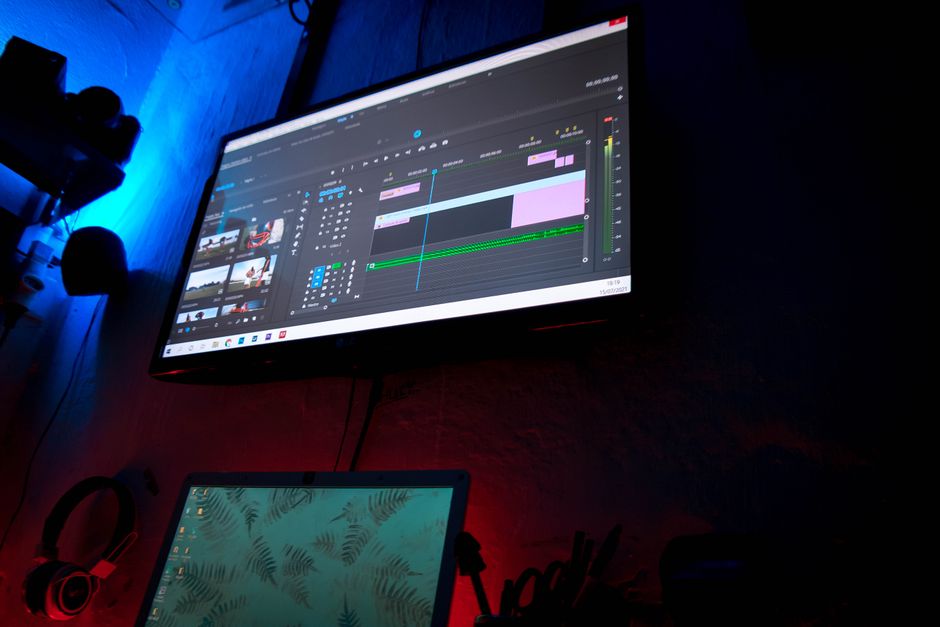
The word production makes people picture a set. In post, production means everything that turns raw material into a finished piece. Here is the actual sequence.
Structure first. Before anything is edited we work out what the video is arguing and in what order. Most corporate video fails here rather than in the edit. A five minute piece that wanders costs the same to make as a three minute piece that lands.
Selecting from what you have. You send us the drive, the folder, the links. We go through it and pull what is usable. This step surprises people. There is usually more good material than they thought, and less of it is where they expected.
Assembly. The rough cut, built to the structure, timed to the script or voiceover.
Motion graphics and titles. Lower thirds, data on screen, animated logos, transitions, callouts. On a no-shoot project this carries more weight than usual, because graphics are doing work that a camera would otherwise do.
Screen and slide material. Software walkthroughs, dashboards, decks. Recorded cleanly and animated so they read as video rather than as a slideshow with narration over it.
Stock, where it genuinely helps. Licensed footage and images to cover the gaps. Used carefully, this is invisible. Used lazily, it makes a company look generic, so we lean on your own material first.
Voiceover. Professional narration if you want it, or a recording from someone on your team if the message should come from a named person.
Colour. Your material will have been captured on different devices in different light over several years. Grading is what makes twelve sources look like one film rather than a compilation.
Audio. Cleanup, levels, and music. On music: we offer royalty-free tracks from our own library as a paid add-on, and those come with the usage permit you need. If you want a specific well-known or commercially released track, licensing it legally is your responsibility.
Captions and delivery. Burned in or as a separate file, plus versions cut for the places you will actually post it.
What you need to send
Less than people expect, but the answer is not nothing.
Any video you have, in whatever shape it is in. Photos. Logos and brand colours if you have a guide. A rough sense of the message and who it is for. If you have a script, send it. If you do not, an outline or even a phone call is enough to start from.
The single most useful thing you can send is more raw material than you think we need. Choosing from too much is easy. Building from too little is not.
When we will tell you no
If there is genuinely nothing to work with, we will say so rather than take the job and pad it with stock until it looks like an advert for nothing in particular.
If the video's whole purpose is a person speaking to camera and no such recording exists, that needs recording by someone, and that someone is not us. We are happy to tell you what to capture and how, then build the finished piece around it once you have it.
What it gets you
The obvious advantage is cost, and it is real. Removing the shoot removes crew, location, equipment, travel and the coordination around all of it.
The less obvious advantage matters more. Material you already paid for starts earning again. Most companies are sitting on an archive they think of as old footage. Cut properly, with a clear structure and real graphics, it becomes a recruitment video, a capability film for a tender, a company history for an anniversary, or twenty short pieces for social.
And because nothing depends on a schedule, revisions are cheap. Changing your mind after a shoot means reshooting. Changing your mind here means editing.
How to start
Send us what you have and tell us what it is for. We will tell you honestly what can be made from it, what is missing, and what it would cost.
Dvideo Productions is based in Westchester, New York, and we work with companies across the country through a fully remote process. Nothing needs to be shipped and nobody needs to travel.